
HASC is pleased to share a spreadsheet of psychiatric training programs as a resource for hospitals, health systems and behavioral health organizations.
This resource was developed to provide a centralized list of training opportunities to support workforce development, recruitment, educational partnerships and program planning. We hope it serves as a useful tool for identifying residency, fellowship and other psychiatric training programs across Southern California.
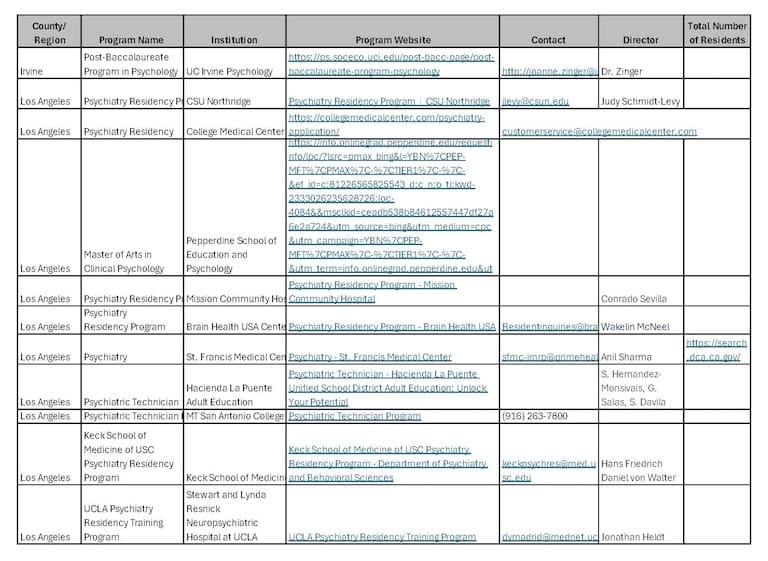
Potential uses for this resource include:
- Identifying potential recruitment and partnership opportunities.
- Connecting with residency and fellowship programs for clinical placements or educational initiatives.
- Supporting workforce planning and behavioral health service expansion.
- Sharing information with clinicians, educators, and administrative staff involved in psychiatric training and recruitment.
Psychiatric training programs can benefit hospitals in several important ways, particularly as organizations work to address behavioral health workforce shortages and expand access to care.
- Recruitment pipeline: Residency and fellowship programs provide a direct pathway for recruiting psychiatrists after they complete training. Many physicians choose to practice where they trained or have established professional relationships.
- Workforce development: Training programs help build a sustainable psychiatric workforce by increasing the number of qualified psychiatrists entering practice and encouraging retention within a region.
- Academic partnerships: Hospitals can collaborate with training programs on clinical rotations, research, quality improvement initiatives and educational programming, strengthening relationships with medical schools and academic institutions.
- Quality of care: Teaching environments encourage evidence-based practice, continuous learning, interdisciplinary collaboration and implementation of the latest clinical guidelines, which can enhance patient outcomes.
- Reputation and recognition: Hospitals affiliated with training programs often strengthen their reputation as centers for education and excellence, making them more attractive to physicians, staff and patients.
- Community impact: Expanding psychiatric training opportunities helps address regional behavioral health shortages and improves access to mental health services, particularly in underserved communities.
We hope this resource will be valuable to your organization as you explore opportunities to strengthen psychiatric workforce development, recruitment and educational partnerships. We encourage you to use and share the resource with colleagues who may benefit from this information.
For any questions, please contact Soyinka Allen, program director, workforce development, at [email protected] or (213) 538-0722.