
Event Recap
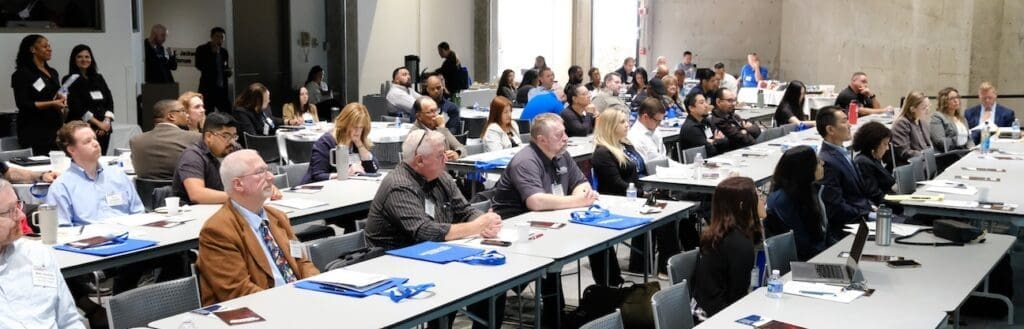
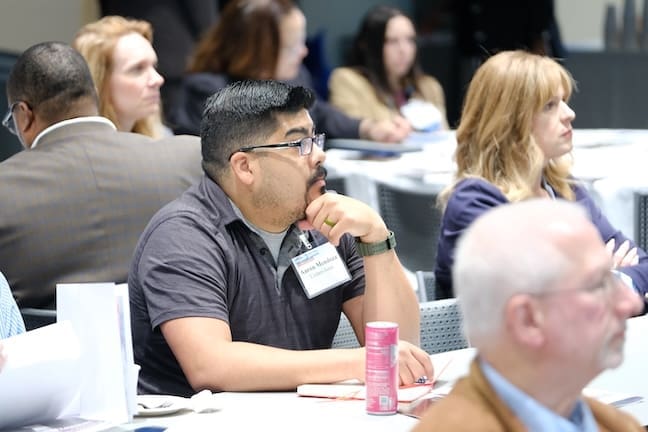
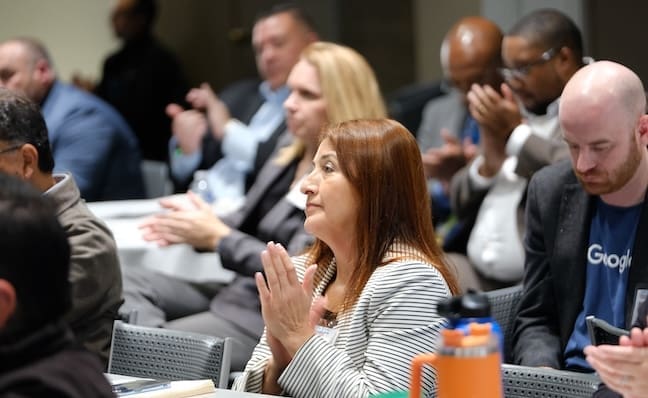
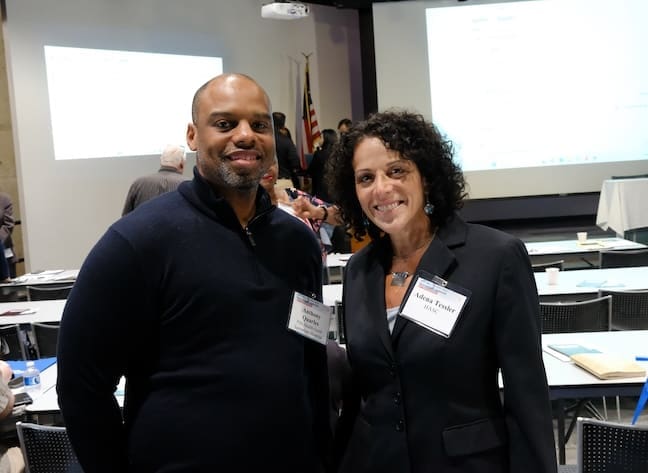
HASC, the Federal Bureau of Investigation (FBI) and City and County of Los Angeles public safety partners recently held the first of two Health Care Security and Emergency Preparedness Symposiums at Valley Presbyterian Hospital, Van Nuys. The May 7 program focused on the growing number of physical and cyber threats facing healthcare organizations and on preparing for major sporting events that will draw millions to Southern California in the next two years.
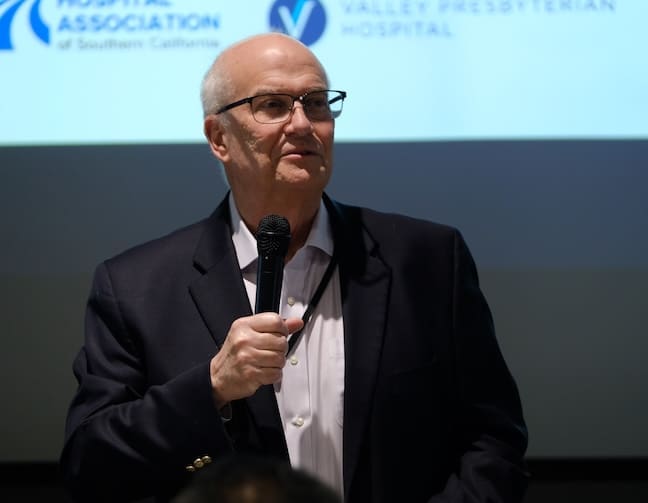
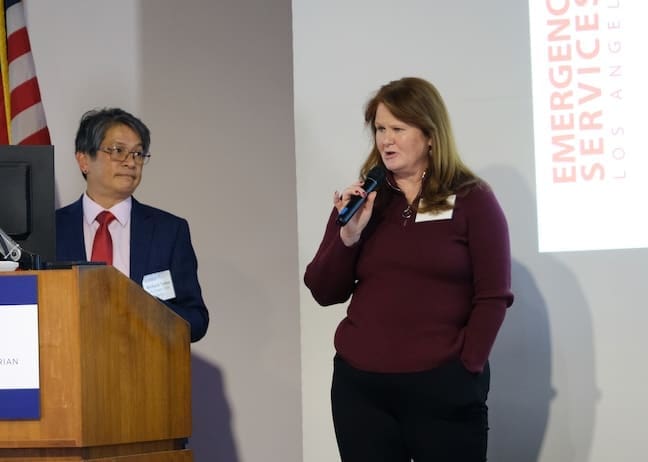
Kevin Miller, director, safety and security at Valley Presbyterian, greeted the audience, followed by a welcome from Gus Valdespino, the hospital’s chief executive officer. HASC’s Paul Young, chief of advocacy and public policy, introduced the association and its role in convening the event. He thanked agency partners and event sponsors for their collaboration in helping make the symposium possible.
Young then handed the microphone to Ketrin Adam, special agent and private sector coordinator, FBI Los Angeles, who served as event emcee. She discussed the Bureau’s InfraGard program, a key public‑private information sharing partnership with critical infrastructure sectors, including healthcare. She also thanked Valley Presbyterian Hospital for hosting the multi‑agency program. Jeff Rauch, a senior supervisory intelligence analyst with the FBI, then gave a brief overview of the current threat environment, noting that, as part of critical infrastructure, hospitals and public health agencies are key protection nodes.
Kristy Hamer, Los Angeles Mayor’s Office, also underscored the importance of cross‑sector coordination in emergency response and preparedness, acknowledging the FBI, California Cybersecurity Integration Center and Los Angeles Police Department for taking part in the symposium.
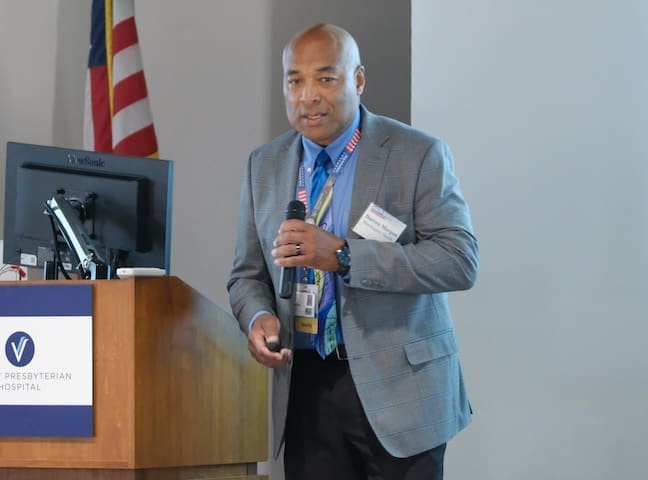
The program moved into a case study on workplace violence and active shooter preparedness with Darren Morgan, director of emergency management, parking and security services, Huntington Health. Describing hospital security as “an art” rather than science, Morgan shared steps Huntington has taken to reduce weapons‑related incidents, such as coordination with law enforcement and realistic staff drills.
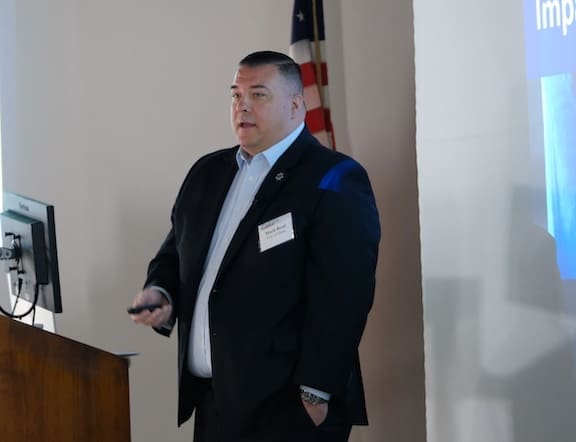
Mark Reed, executive director of campus support operations, City of Hope, walked through weapons detection strategies and the evolving regulatory environment. He tied staff perceptions of safety to recruitment, retention and turnover costs and discussed California’s new AB 2975 mandate that hospitals implement weapons screening by 2027. Acknowledging the challenges and costs of retrofitting older facilities with these systems, he also noted the importance of ensuring safety and peace of mind as much as possible for patients and staff.
Roger Allen, a major crimes detective with the Los Angeles Police Department, discussed how law enforcement responds to swatting reports. Swatting is a crime in which perpetrators falsely report a threat to emergency services, with the goal of drawing a large law enforcement response to a targeted location. Swatters are “usually 12‑year‑olds to 30‑year‑olds,” Allen said, and described how they operate online. These cases are challenging to investigate due to their technical complexity and cross‑jurisdictional nature, and will become more so as technology grows. Hospitals are “a unique location,” he said, because critical patients often can’t be evacuated, and he urged hospitals to train staff on handling threat calls and law enforcement response.
Other morning presentations, led by federal and county partners, offered perspectives on identifying and addressing higher‑level threats. John Wood, FBI intelligence analyst, addressed emerging geopolitical risks worldwide, and Jessica Salo, FBI supervisory special agent, provided an overview of evolving terrorism threats.
Nicolas Beliz, Psy.D., a supervising psychologist with the Los Angeles County Department of Mental Health, spoke about behavioral flags that could signal future danger, and the role of emergency outreach teams. FBI Special Agents Whitney Gantt and Ronald Schloegel then discussed human trafficking and how healthcare organizations can better identify, support and respond to potential victims in clinical settings.
Following a networking lunch, the afternoon sessions shifted toward cyber threats, public health preparedness and regional coordination. Justin Vallese, special agent and cybersecurity outreach coordinator, FBI, discussed strategies for organizations to strengthen cybersecurity resilience and mitigate risks. Attendees then heard briefings from Kyle Krueger and Nick Manago, U.S. Secret Service, on national security infrastructure protection updates and from Alith Saengchanh, Cybersecurity and Infrastructure Security Agency, on resources available from the agency.
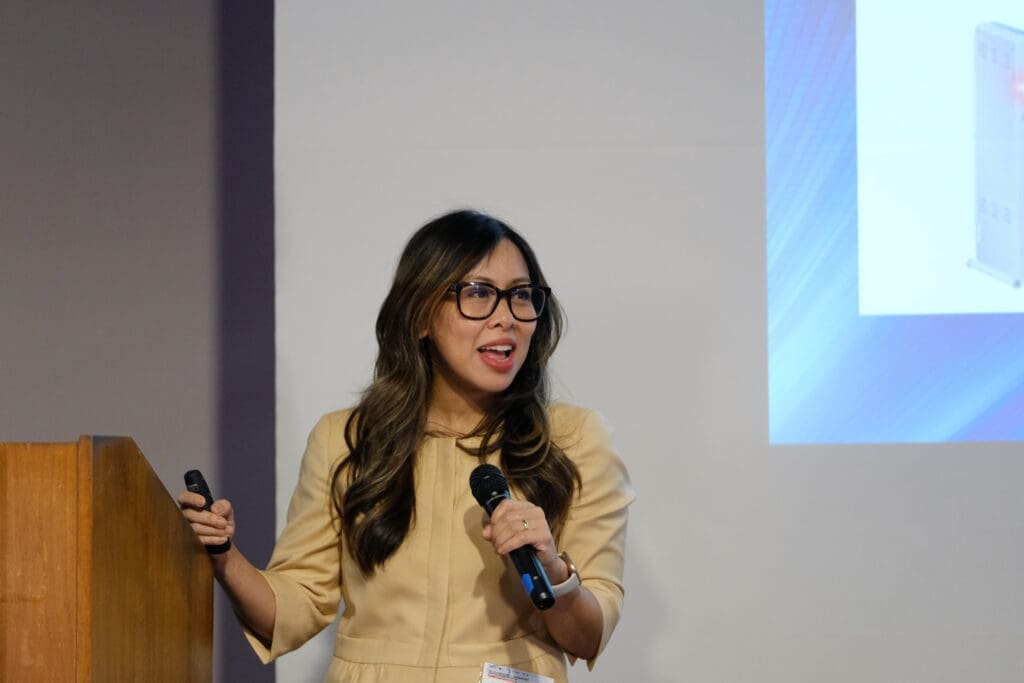
Representing the Los Angeles County Department of Public Health, Stella Fogleman, RN, MSN/MPH, outlined how the region is preparing for the 2026 FIFA World Cup in June and July. Focus areas include health inspections, disease surveillance, emergency management, bioterrorism readiness and coordinated public messaging.
Los Angeles County Emergency Medical Services (EMS) Agency Director Richard Tadeo, RN, and HASC Senior Vice President, ReddiNet, Tammi McConnell, MSN, RN, reviewed EMS disaster roles and highlighted ReddiNet tools supporting hospital operations and regional coordination during major incidents. Mikael Magnuson, cyber threat intelligence branch chief, California Cybersecurity Integration Center, then described the role of the state’s fusion center in identifying threats at large and special events.
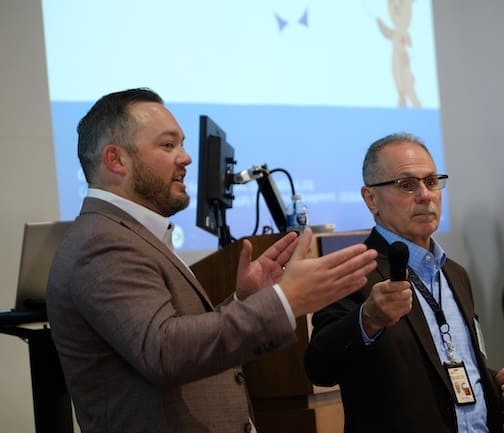
After a short program break, the audience heard from Jason To, special agent and weapons of mass destruction (WMD) coordinator, FBI, who gave an overview of how the agency responds to WMD and hazardous materials (hazmat) incidents. Complementing the session, Calvin Fakkema, director, support services, and Chris Riccardi, manager of business continuity and emergency management, Rady Children’s Health Orange County, presented a hospital case study on a Code Orange hazmat and WMD response.
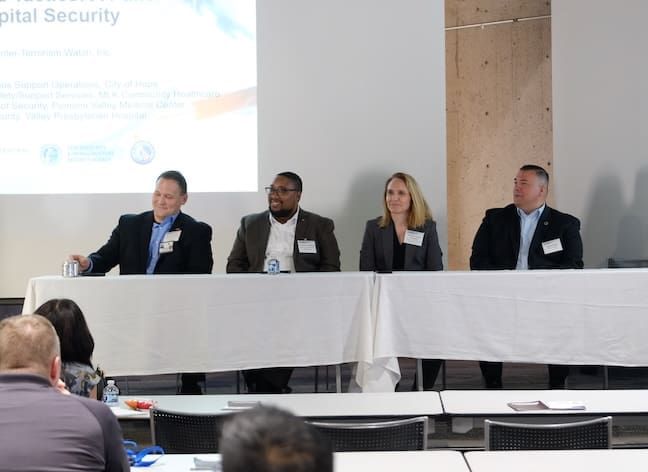
The event concluded with Threats, Trends and Tactics, a panel of hospital security leaders featuring Kevin Miller, Mark Reed, Trenton Jackson, MLK Community Healthcare, and Michelle Walsh-Fernandez, Pomona Valley Hospital Medical Center.
By day’s end, attendees had gained a deeper understanding of the risks faced by Southern California hospitals and public safety agencies. They left with practical tips for strengthening organizational resilience and preparedness in addressing a range of physical and cyber emergencies and threats. The event also reinforced the importance of strong partnerships with city, county and federal agencies in meeting these challenges.
HASC thanks our public agency partners and event sponsors for their support in making the symposium a success. Special thanks also to Valley Presbyterian for hosting the event and providing lunch. The next Health Care Security and Emergency Preparedness Symposium will take place Tuesday, July 28, at Pomona Valley Hospital Medical Center.
Symposium Presentations and Resources
Speaker Presentations
- Darren Morgan – Active Shooter Training
- Mark Reed – Weapons Detection Strategies
- Stella Fogleman – FIFA World Cup Preparedness
- Richard Tadeo, Tammi McConnell – EMS-ReddiNet Resources.pdf
- Calvin Fakkema, Chris Riccardi – Code Orange Response
Additional Resources
- Additional Resources/Articles
- First Responders Toolbox
- JCAT Pre-hospital and Hospital Terrorism Prevention Opportunities
- U.S. Violent Extremism Mobilization Indicators 2025