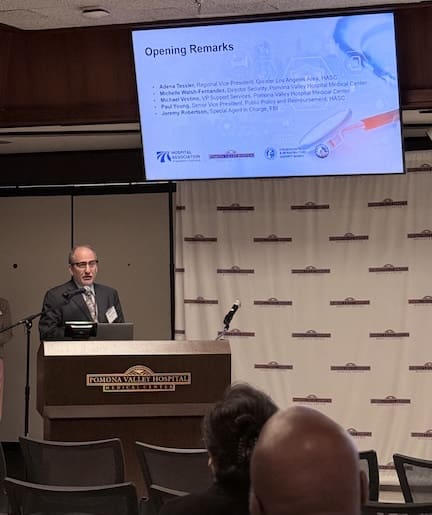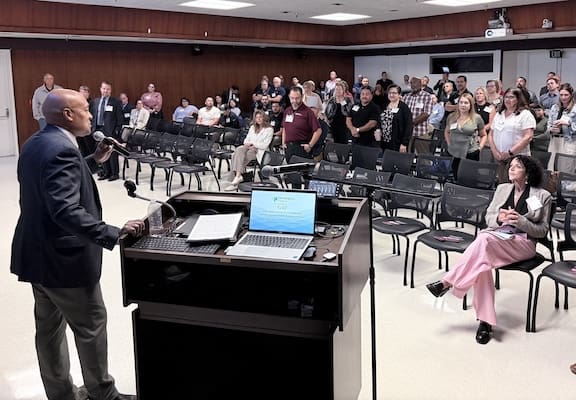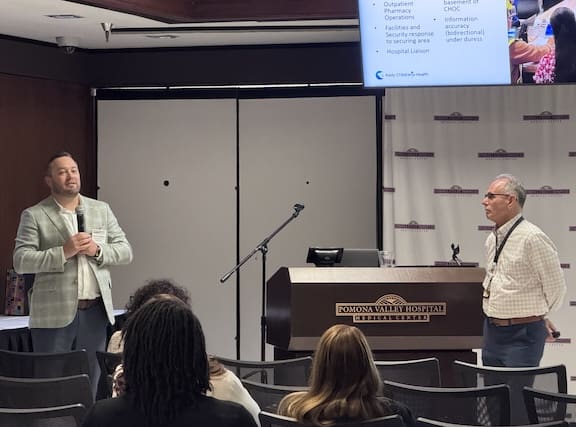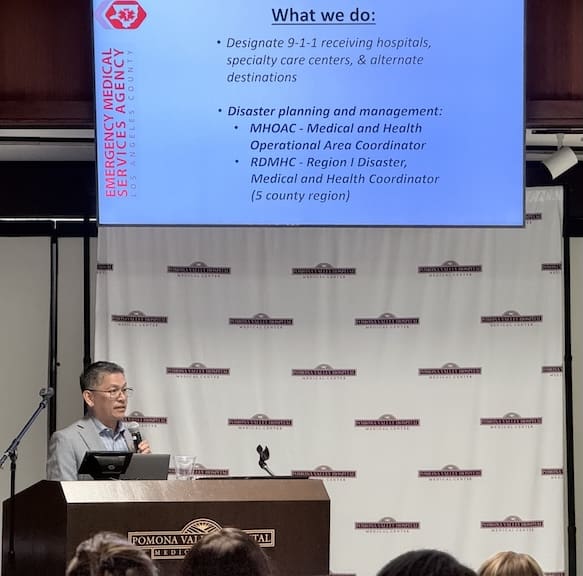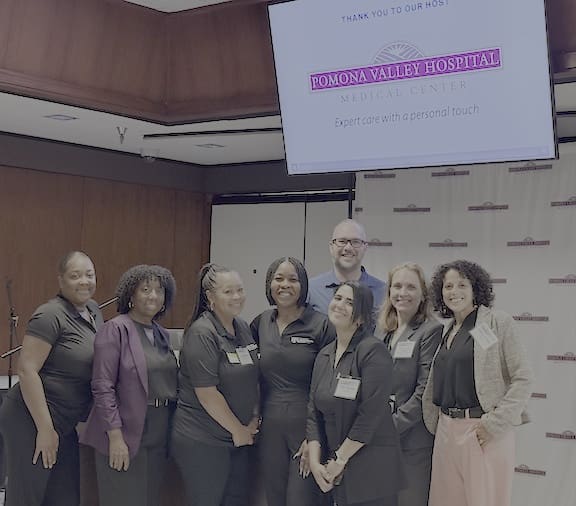
HASC, the Federal Bureau of Investigation (FBI) and City and County of Los Angeles public safety partners held their second Health Care Security and Emergency Preparedness Symposium July 28 at Pomona Valley Hospital Medical Center (PVHMC), Pomona.
With hospitals facing increased threats and swatting, such as a recent bomb scare at Huntington Health, the program offered timely and critical information. Sessions focused on ways hospitals can prevent and address a range of physical and cyber threats. One speaker also discussed how the region addressed security during recent World Cup events, along with preparations for the 2028 Olympics, expected to bring millions of visitors.
Adena Tessler, event emcee and regional vice president, HASC, opened the program with a welcome. PVHMC’s Michelle Walsh-Fernandez, director, security, and Michael Vestino, vice president, support services, also greeted the audience. Paul Young, HASC’s senior vice president, public policy and reimbursement, then gave an overview of the association and its role in convening the event. He also thanked HASC’s agency partners and event sponsors for their support in making the symposium possible.
Jeremy Robertson, special agent in charge, FBI, gave introductory remarks on behalf of his agency, followed by Darren Morgan, director of emergency management, parking and security services, Huntington Health. Morgan presented a case study on his hospital’s efforts to reduce workplace violence and weapons-related incidents.
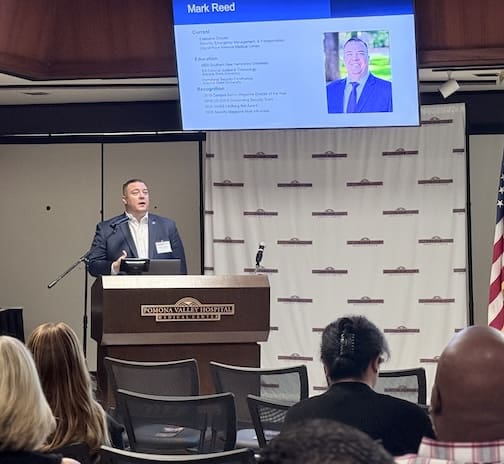
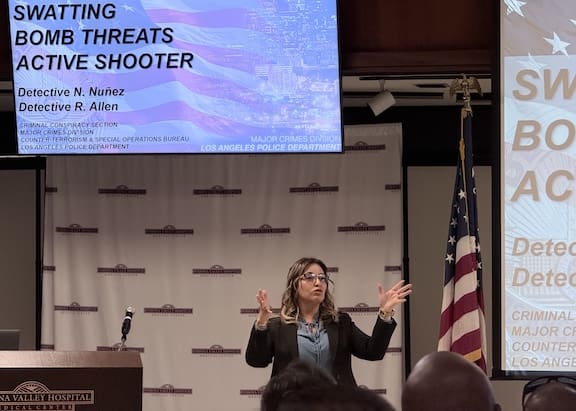
Mark Reed, executive director of campus support operations, City of Hope, then discussed weapons detection strategies and the evolving regulatory environment. He was followed by Natali Nunez and Roger Allen, Los Angeles Police Department, who gave an overview of law enforcement responses to swatting reports.
Swatting is a crime in which perpetrators falsely report threats to emergency services, aiming to provoke a large law enforcement response at a targeted location. The major crimes detectives described how swatters, usually ranging from preteen to late 20s, operate, and the challenges of investigating cases due to their online and technological nature.
The morning continued with presentations from federal and county partners on recognizing and responding to larger-scale threats. FBI intelligence analyst Emily Hainline covered geopolitical risks unfolding around the world, while FBI supervisory special agent Jessica Salo outlined how terrorism threats have shifted in recent years.
Nicolas Beliz, Psy.D., a supervising psychologist with the Los Angeles County Department of Mental Health, discussed warning signs that can point to future violent behavior. He also explained the role of emergency outreach teams in early intervention. FBI Special Agents Whitney Gantt and Ronald Schloegel followed with a session on human trafficking, offering guidance on how clinical staff can recognize, support and respond to potential victims.
After lunch, the program turned to cybersecurity, public health readiness and regional coordination. Justin Vallese, special agent and cybersecurity outreach coordinator, FBI, shared approaches organizations can take to build cyber resilience and reduce risk. Following Vallese, Kyle Krueger, U.S. Secret Service, discussed the latest updates to national security infrastructure protection. Attendees also heard from Faaiuaso (J.R.) Lilo, Cybersecurity & Infrastructure Security Agency, on resources the organization makes available to healthcare organizations.
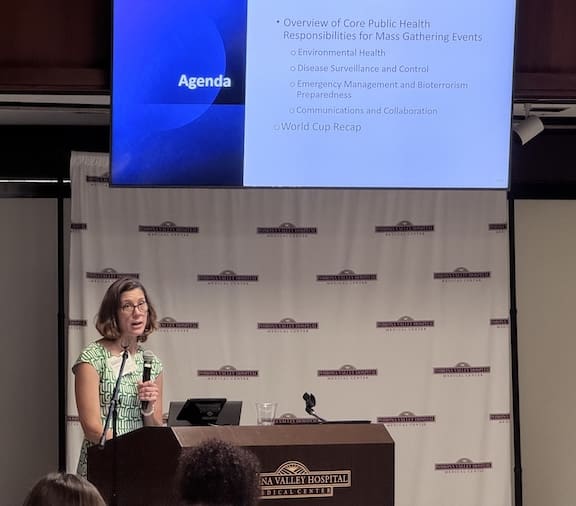
With the 2026 FIFA World Cup having concluded in July, Annabelle de St. Maurice, MD, MPH, Los Angeles County Department of Public Health, walked through the region’s public health response to the event. She explained how health inspections, disease surveillance, emergency management, bioterrorism readiness and coordinated messaging across agencies worked together to keep visitors and residents safe during a potentially vulnerable time.
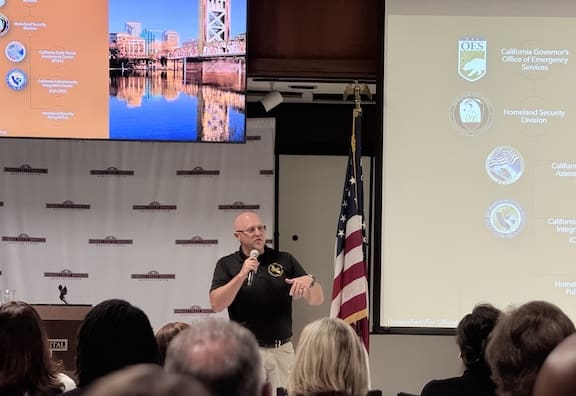
Richard Tadeo, RN, director, Los Angeles County Emergency Medical Services (EMS) Agency, then reviewed how EMS fits into disaster response. He pointed to ReddiNet, HASC’s emergency communications service, as a key tool supporting hospital operations and regional coordination during major incidents. Timothy McGahan and Nathan DiPillo then explained the function of the state’s fusion center in tracking threats tied to large-scale and special events.
Following a break, Jason To, special agent and weapons of mass destruction (WMD) coordinator, FBI, outlined how the agency responds to WMD and hazardous materials (hazmat) incidents. Building on that discussion, Calvin Fakkema, director of support services, and Chris Riccardi, manager of business continuity and emergency management, Rady Children’s Health Orange County, walked through a hospital case study involving a Code Orange hazmat and WMD response.
The day closed with Threats, Trends and Tactics, a panel discussion among hospital security leaders. Brett Modesti, president of P3 Shield, moderated the conversation, which included Mark Reed, Michelle Walsh-Fernandez, Trenton Jackson, MLK Community Healthcare, and Kevin Miller, Valley Presbyterian Hospital.
Attendees left with a clearer picture of the risks facing Southern California hospitals and public safety agencies, along with practical strategies for strengthening resilience against physical and cyber threats. The symposium also underscored how much healthcare organizations can gain from strong partnerships with city, county and federal agencies in tackling these challenges together.
HASC is grateful to our public agency partners and event sponsors for their support in hosting another successful symposium. Special thanks also to PVHMC for providing the event venue and lunch.
Symposium Presentations and Resources
- Fakkema-Riccardi – Code Orange: Hazardous Material WMD Response
- Morgan – Workplace Violence and Active Shooter
- de St. Maurice – Surveying for Diseases at Mass Gatherings
- Reed – Weapons Detection in the Health Care Sector
- Tadeo – Regional EMS System Management and ReddiNet Resources
- Allen-Nunez – Law Enforcement Response to Swatting
- California Cyber Security Integration Center (Cal-CSIC) Brochure
FBI Resources
- InfraGard Fact Sheet 2026
- Pre-hospital and Hospital Opportunities for Terrorism Prevention
- U.S. Violent Extremism Mobilization Indicators 2025
- Violent Extremist Mobilization Indicators and Special Events
FBI website links:
- Terrorism
- The Cyber Threat
- Human Trafficking
- Guidance to Help Health Care Organizations Prevent Targeted Violence
- Letter to Parents, Guardians, and Caregivers on Predators
- FBI Boston Warns of Extremists Targeting Children, Vulnerable Victims Online
Videos:
- FBI Special Agent Debunks Human Trafficking Myths
- FBI Announces Operation Riptide
- FBI Cyber Launches Operation Winter SHIELD
- FBI Cyber Division – LinkedIn
Event Photos